

The Hidden History of Washington Park
When you walk the trails of Washington Park today, it’s hard to imagine that this lush landscape was once a massive chunk of land known simply as City Park. Purchased in 1871 from Amos King, the land’s transformation began under the vision of the 1903 Olmsted Plan, which recommended renaming the Park to reflect its location on Washington Street (now Burnside) and replacing formal gardens with native species.
A Legacy of Social Welfare and Growth
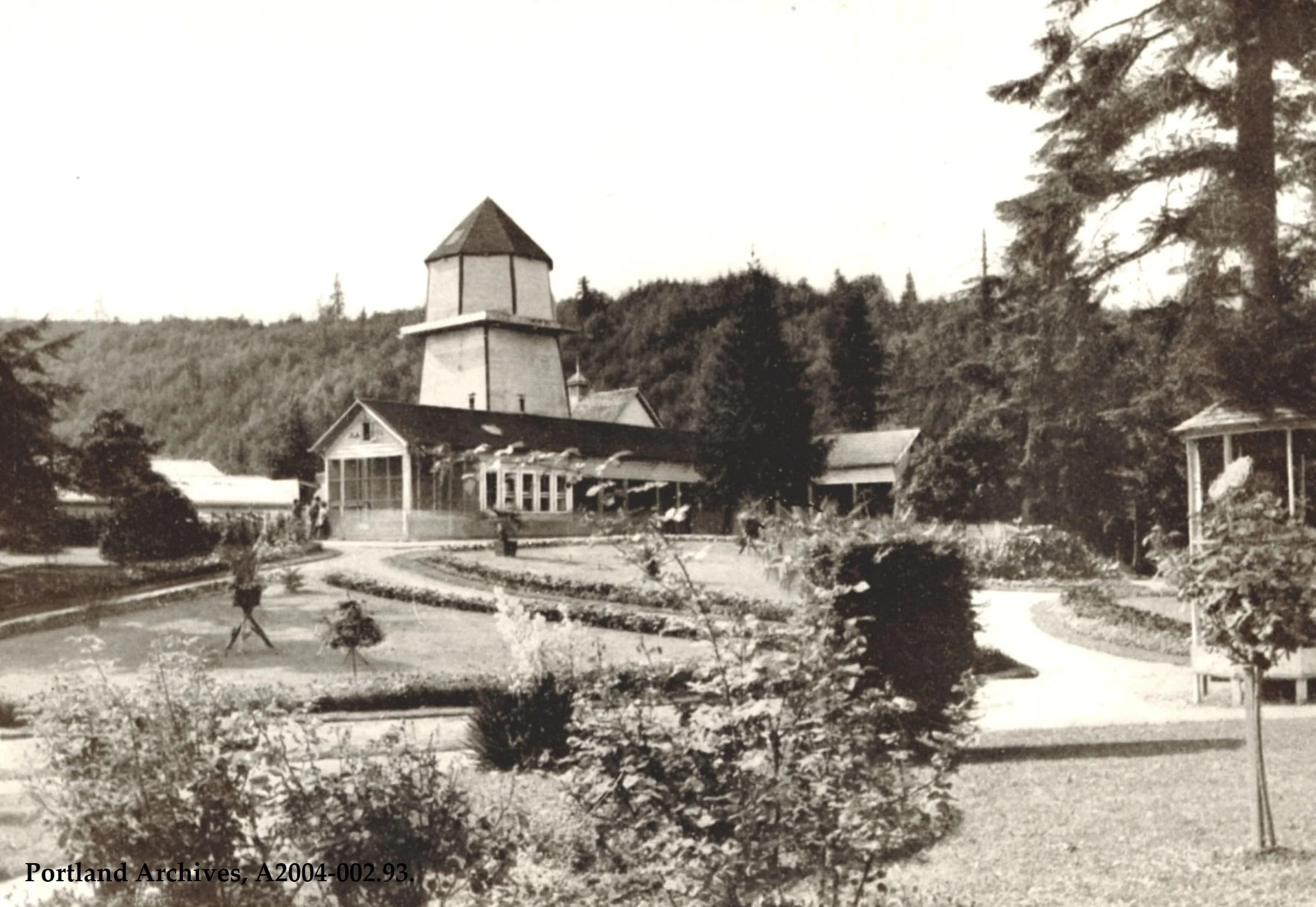
Long before it housed the cultural institutions we know today, much of Washington Park’s territory was Hillside Farm, a poor farm established in 1868. This 160-acre site served as social welfare for the unhoused and infirm, where residents tended to an extensive orchard and learned farming skills. After the farm moved to what is now McMenamin’s Edgefield in 1911, the land was repurposed, eventually becoming the foundation for the Oregon Zoo, World Forestry Center, and Hoyt Arboretum.
The Surprising Origins of Heavenly Falls
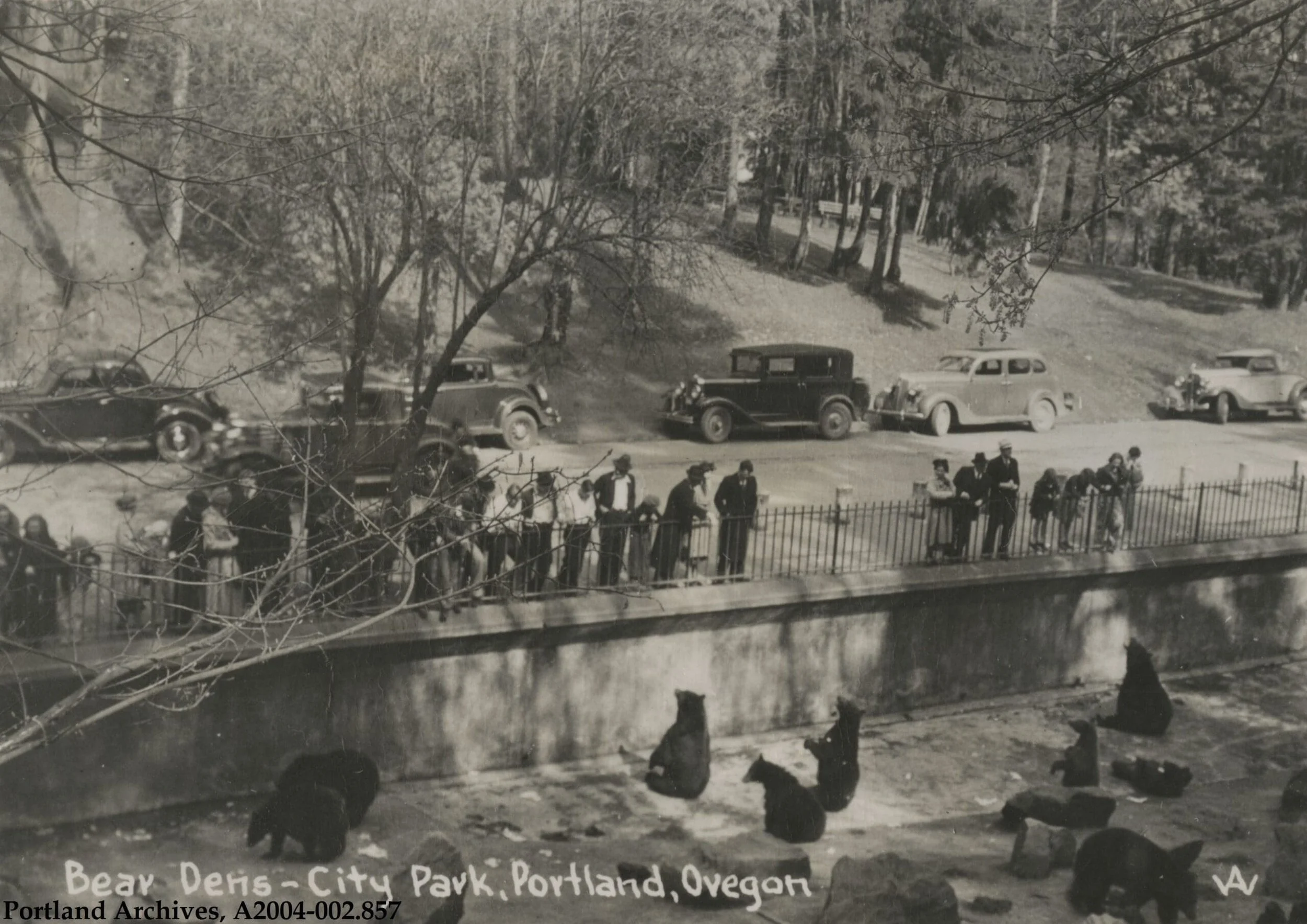
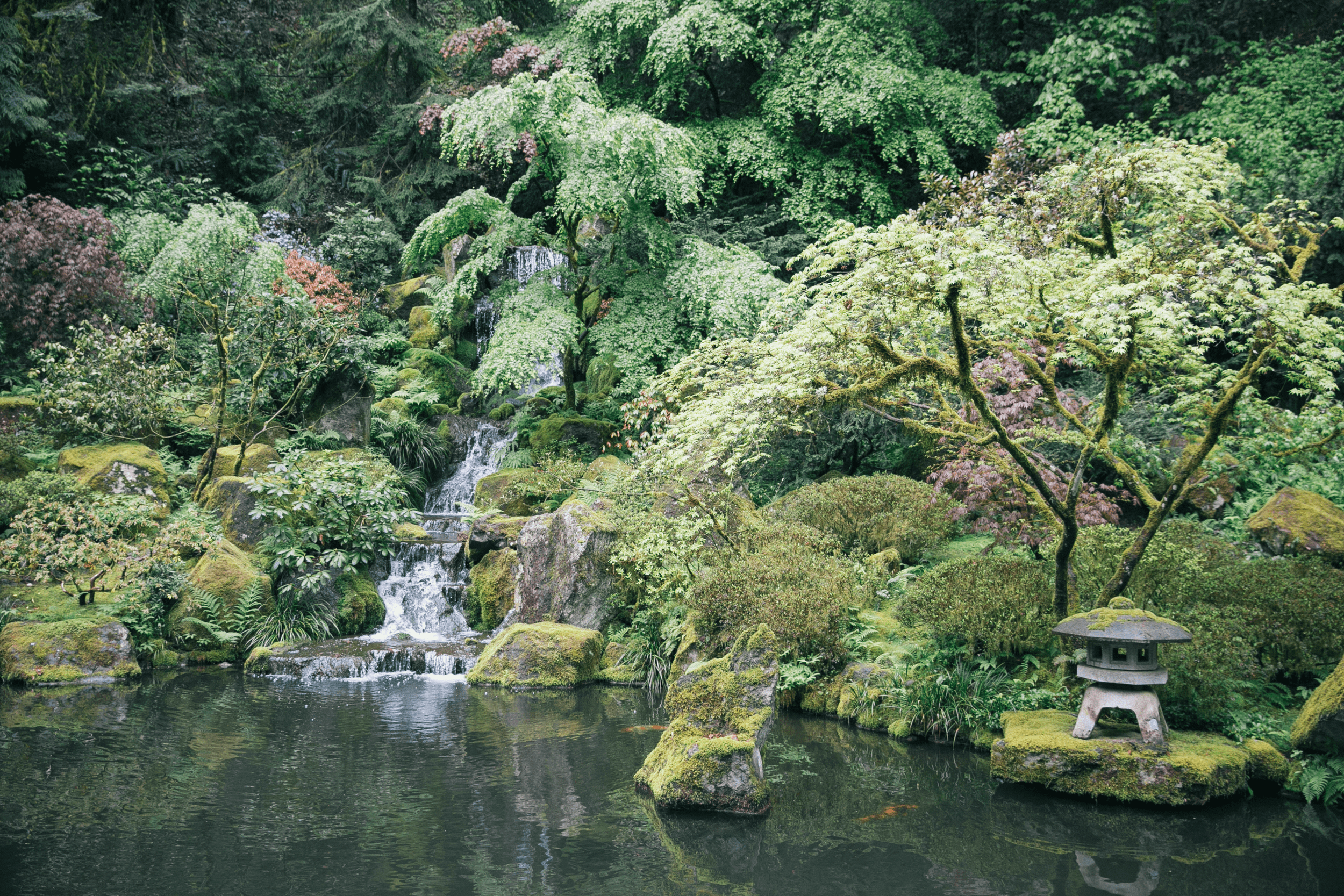
On the other end of Washington Park, Portland Japanese Garden offers harmony and peace. But before this area housed the Garden, it was home to part of the Portland Zoo (now the Oregon Zoo). Early Zoo exhibits occupied sections of the hillside, long before the Zoo moved to its current location nearby. At that time, the Garden’s Heavenly Falls was the site of the Zoo’s bear den. It’s a striking image to imagine: Visitors from the early 1900’s in formal suits and long dresses leaning over the stone walls to see the bears, a sharp contrast to the meditative stillness of the falls today. Today, you can still find a nod to this ursine habitat in the walk beside the Strolling Pond, where seven stones are laid in the formation of the Ursa Major constellation (the Great Bear).

Icons Born from Resilience
The early history of the Oregon Zoo is a story of enduring transformation, and this same spirit of preservation and forward-thinking is responsible for many of the Park’s most famous features.
International Rose Test Garden: Established in 1917, it was created to preserve European rose varieties threatened by the destruction of World War I. It is now the oldest continuously operating public rose test garden in the United States.
World Forestry Center: Its roots date back to the 1905 Lewis and Clark Exposition’s massive “log cabin” Forestry Building. After that original structure was lost to a fire in 1964, the center was rebuilt in Washington Park to continue showcasing the global timber industry.
Hoyt Arboretum: Founded in 1928, the Arboretum was championed by leaders who believed every city should have a dedicated space for trees. Despite facing challenges like the 1962 Columbus Day Storm, it has grown into a sanctuary for over 6,000 trees.
Hidden Gems of the Past
As you explore, keep an eye out for these historical markers:
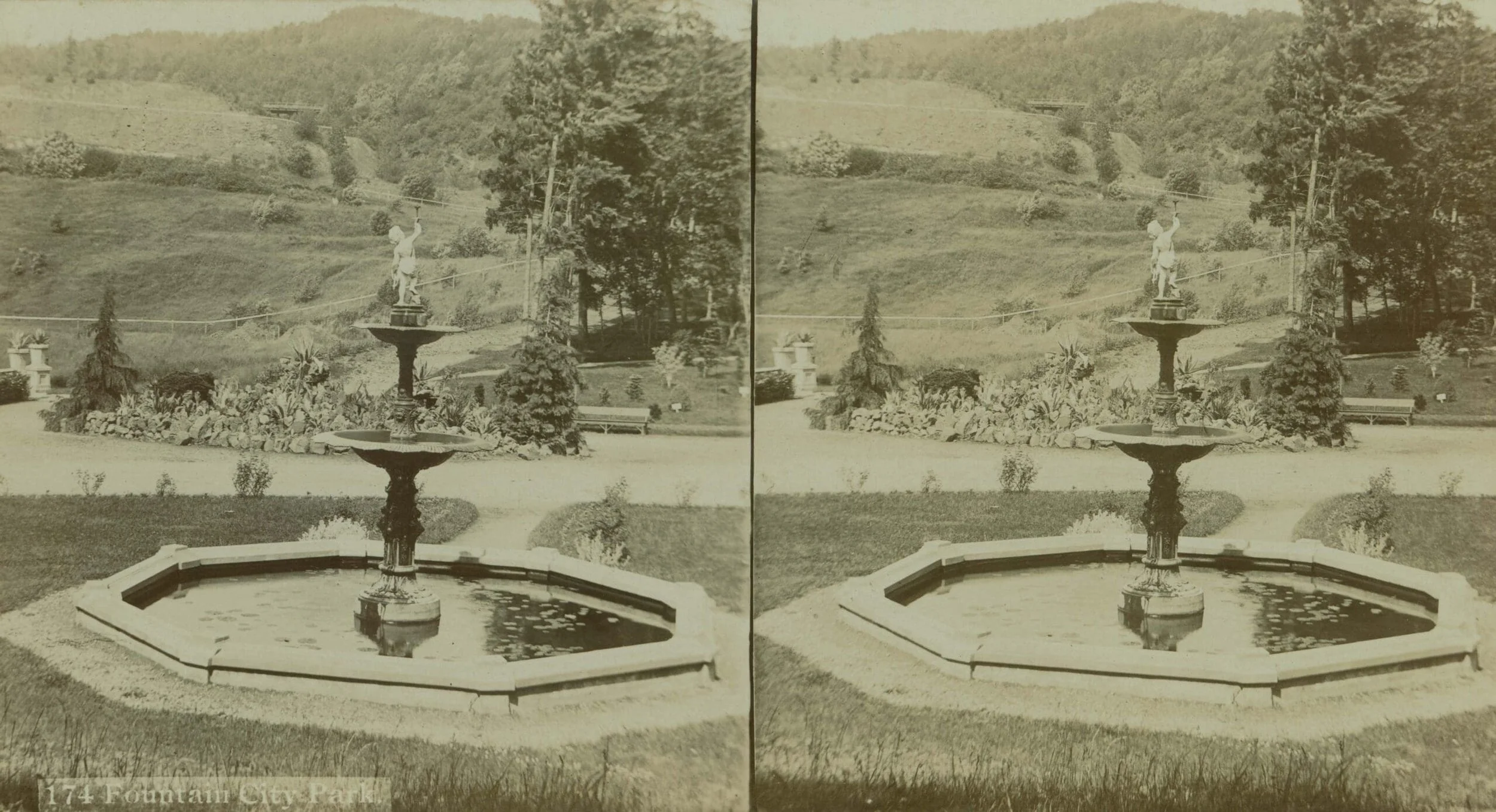
Chiming Fountain (also known as the Cupid’s Fountain): Originally installed in 1891, you can still see this fountain today, though the cupid at the top was lost during a freeze in the 1920s.
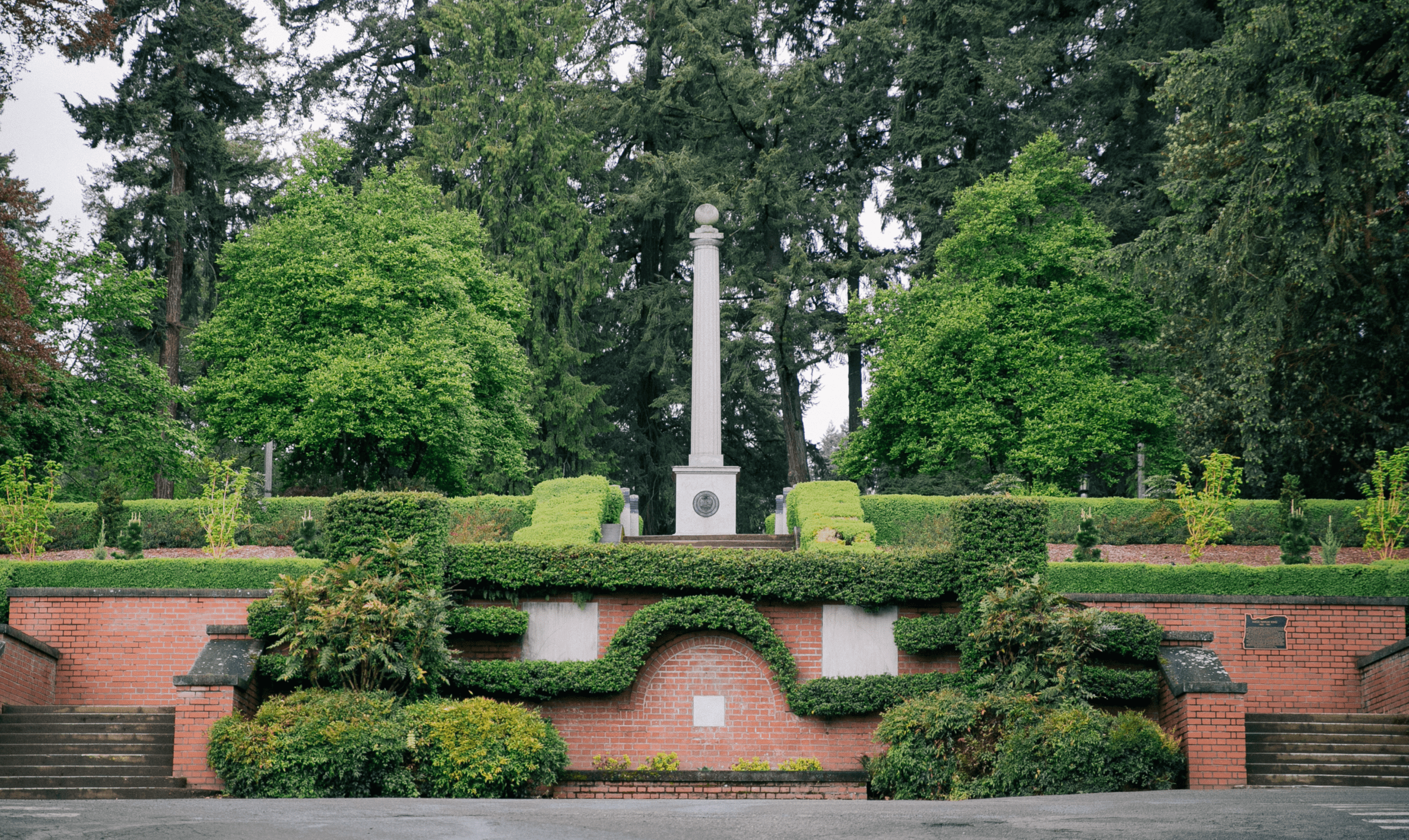
Park Place Entrance: Visit the Park Place entrance to see the beautiful original steps leading up to the Lewis and Clark Memorial Column.
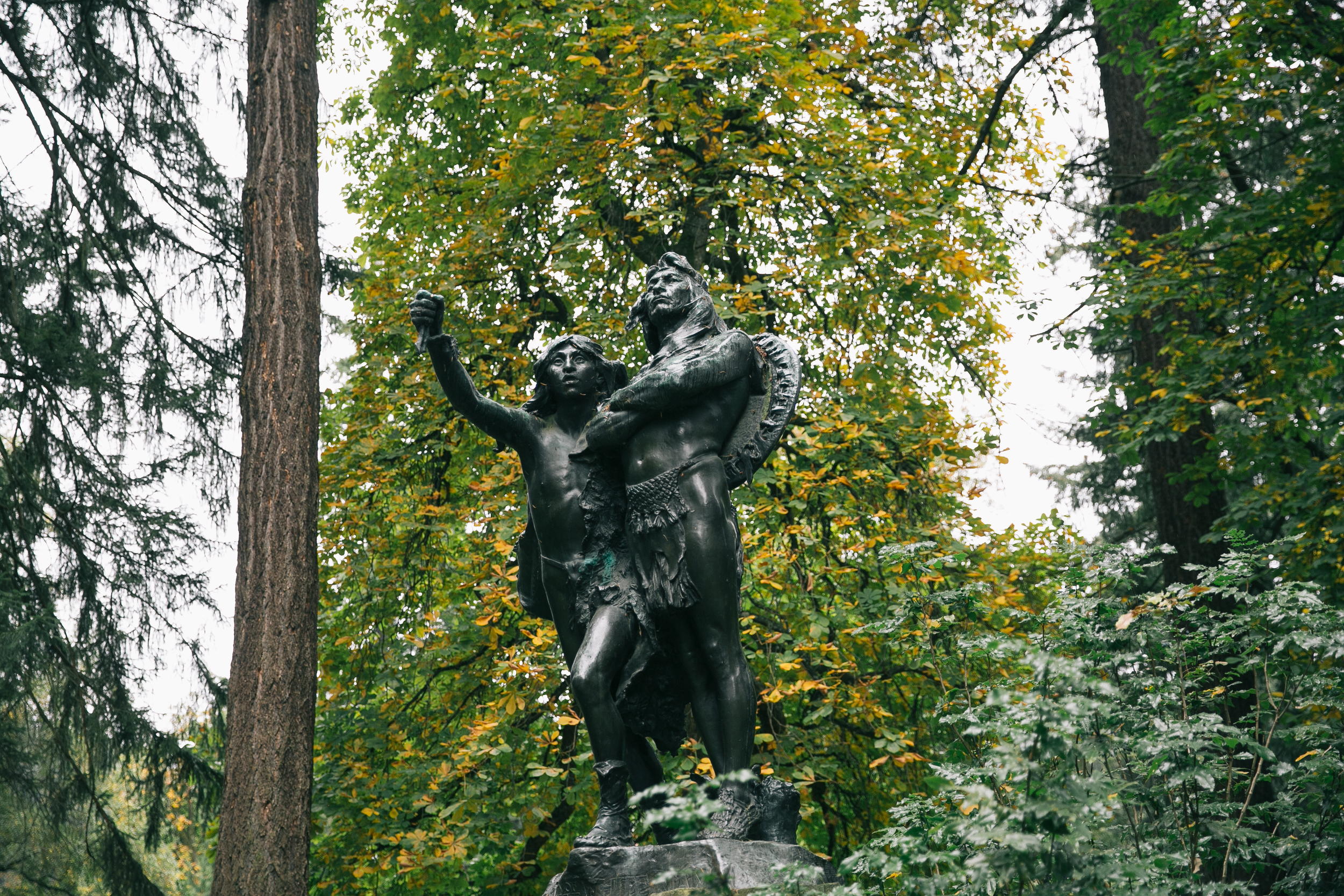
Coming of the White Man Statue (also known as the Chief Multnomah statue): Donated in 1904, this statue depicts Chief Multnomah and a protege looking toward the confluence of the Columbia and Willamette Rivers.
Sacajawea Statue: Unveiled in 1905, it wasn’t just a tribute to the Lewis and Clark expedition—it was a political statement. The statue was funded almost entirely by the National American Woman Suffrage Association to argue that women were central to American history and deserved the right to vote.
The 13,000-Year-Old Secret Under the Zoo: If you take the TriMet MAX light rail to the Park, you’ll arrive at one of the deepest transit stations in the world (260 feet down). The core samples taken during construction revealed that the station is drilled into bedrock basalt carved by the Missoula Floods over 13,000 years ago. On the station platform, a “timeline” wall pairs geologic history with human inventions—a great reminder that Washington Park is literally built on ancient history.
Take a Walk in the Past: A One-Day Historic Itinerary
If you want to experience these stories firsthand, follow this itinerary to spend a day “walking in the past.” This route is designed to be easily accessible using the Washington Park Free Shuttle. You can download a Washington Park map here!
Morning: The Origins of the Park
Start at the Park Place Entrance: Begin at a historic entrance to the Park at SW Park Place. Walk up the original 1871 stone steps to the Lewis and Clark Memorial Column and take in the view that early Portlanders once enjoyed. Continue up the path and keep an eye out for the Sacajawea Statue off of S Lewis and Clark Circle.
Chiming Fountain: From here, it’s a short walk to see the Chiming Fountain, also known as Cupid’s Fountain (minus its cupid!), which has stood since 1891.
Visit the Coming of the White Man Statue: Located near the Holocaust Memorial, this 1904 bronze statue is one of the Park’s oldest landmarks. Walk a short loop north on Canyon Path, continue on Stearns Canyon Road up to the Cloud Forest Walk, and make your way to admire the Statue.
Midday: A Tale of Two Gardens
Hop on the Free Shuttle to the International Rose Test Garden: Spend your midday wandering through rows of historic blooms (or early awakenings during the off-season). Remember, these Gardens have been a testing and conservation site for over 100 years.
Walk to Portland Japanese Garden: Just across the way, visit Heavenly Falls nestled within Portland Japanese Garden. Look down at the stone path for the Ursa Major constellation—your only clue that you are standing exactly where the zoo’s original bear den once was.
Afternoon: From Farmland to Forests
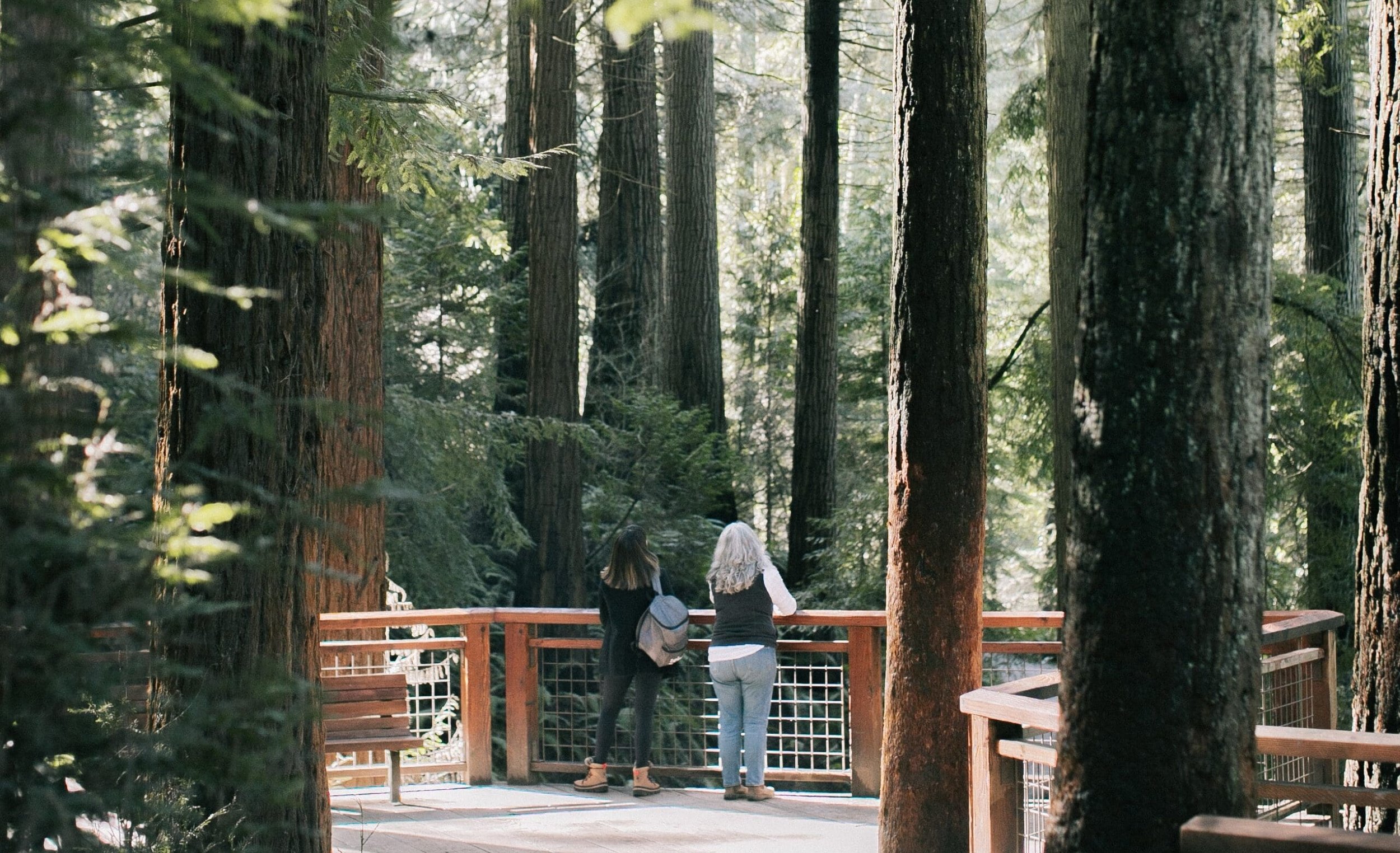
Ride the Free Shuttle to Hoyt Arboretum: Head to the area that was once the Hillside Poor Farm. Explore the Redwood Deck or the Overlook Trail, knowing that these towering trees were planted on a former orchard tended by the city’s most vulnerable residents.
End at the World Forestry Center: Finish your day at the Discovery Museum. The original 1905 log cabin burned down in 1964, but the current building stands as a testament to Portland’s long-standing dedication to timber and forestry history. You can view photographs and other imagery from the original Forestry Center log cabin in the hall on the second floor outside the Mt. Hood Room.
